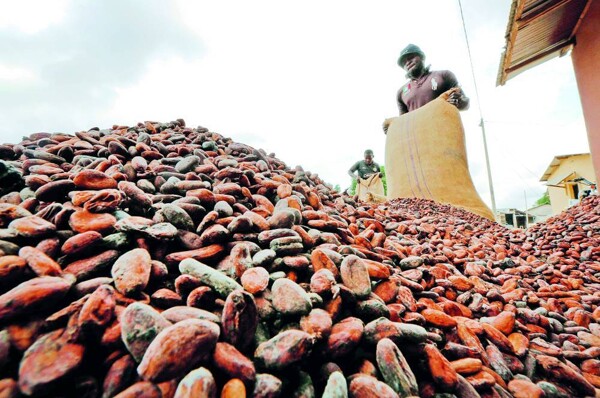
Temperature changes and irregular precipitation affect cocoa cultivation in Ghana, Côte d'Ivoire, Cameroon, and Nigeria - the largest global cocoa producers. According to the organization Christian Aid, they stated that the cost of cocoa has risen by 400%, reaching $12,218 per ton due to drought, driven by extreme weather conditions in West Africa.
Chocolate trees require a specific ecological environment, including high humidity and regular rainfall. It is noted that cocoa farmers need support for adaptation to these changing conditions.
On the other hand, deforestation in the region leads to soil degradation, unsuitable for cocoa farming. Expected losses in cocoa production coincide with the growth of global demand for chocolate, which is anticipated to reach $145 billion by 2030.
Due to emissions from burning fossil fuels, the problem of climate change arises. The organization advocates for a transition to cleaner energy sources, such as solar and wind energy, to mitigate the impacts of climate change.
Cocoa production is limited to tropical zones, especially in West Africa, which is the largest producer of cocoa. Ghana and Côte d'Ivoire together account for approximately 58% of global production.
Climate changes also affect pollination, which is essential for the fertilization of cocoa flowers, exacerbating the problem.